Education Begins with Relationships
For several years, I have been telling the stories of educational projects taking shape in schools, local communities and across the territory through the pages of Latteria di Chiuro. Usually, I am the one asking the questions, listening to other people's experiences and sharing what emerges from the collaboration between individuals, institutions and businesses.
This time, however, I am putting my notebook aside to answer the questions I am most often asked by teachers, public administrators, colleagues and project partners.
This interview tells the story of a journey that, thanks in large part to Latteria di Chiuro and the coordination of Matilde Robustelli della Cuna, has gradually developed into an increasingly extensive educational network. A network capable of bringing together schools, local communities, businesses, public institutions, associations and the cultural sector, and one that continues to grow both within and beyond the Valtellina valley.
How did this way of working come about?
It grew out of a belief developed through many years of working in schools and supported by educational research. Education cannot simply be about transmitting information. People learn when they engage directly, experience things firsthand and integrate what they discover into their everyday lives.
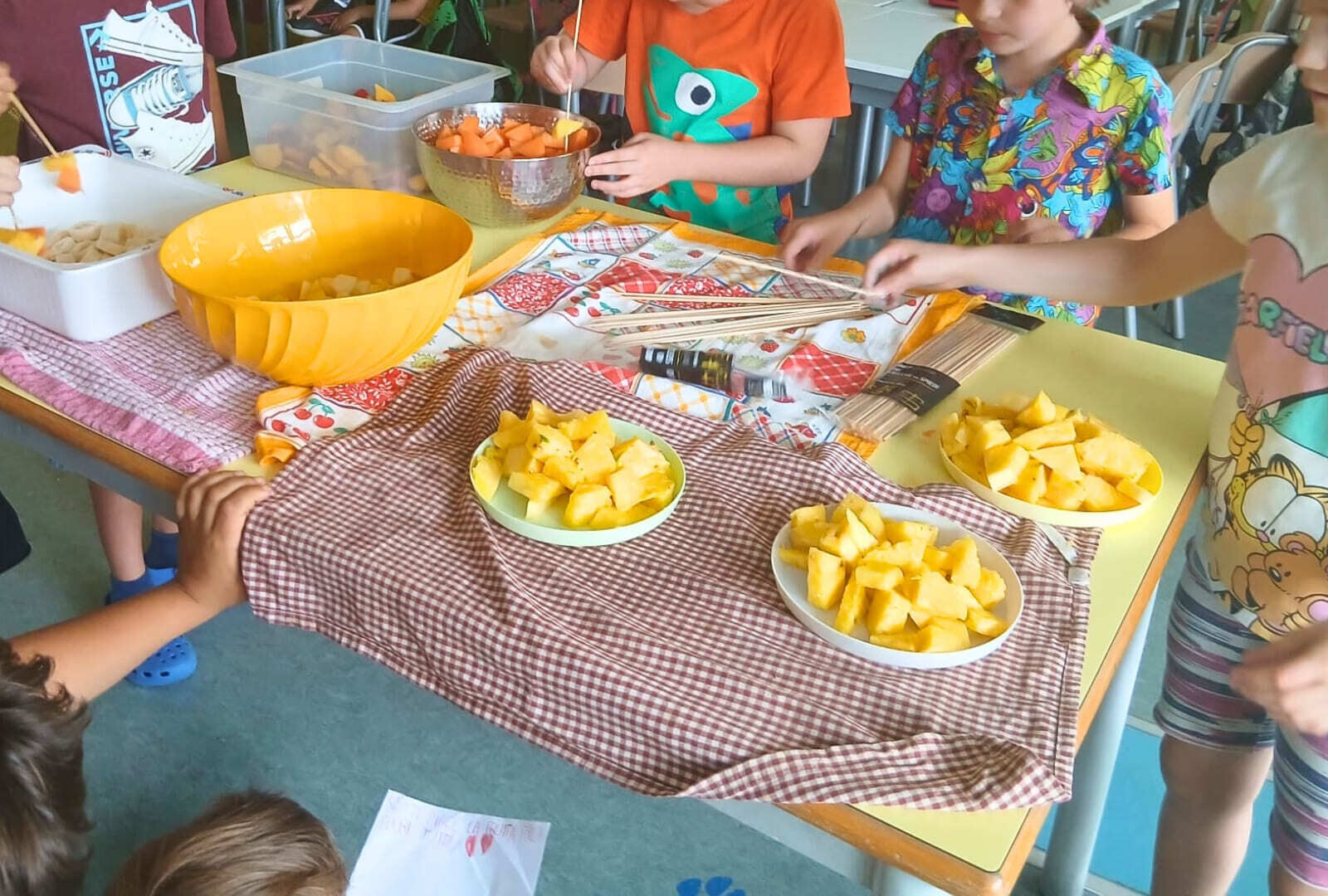
This is why the educational programmes we design are based on workshop-based learning and action research. Children, young people, teachers and adults all become active participants in the learning process. Rather than starting from abstract theories, we begin with real life: food, the environment, relationships and the local territory.
In recent years, your collaboration with Latteria di Chiuro has grown considerably. What made the difference?
The turning point was meeting Matilde Robustelli della Cuna, who has overseen Latteria di Chiuro's educational projects for many years. Matilde had the vision to look beyond the traditional concept of food education, recognising that food can become a powerful tool for discussing sustainability, culture, health, the environment, citizenship and community.
With expertise and dedication, she has built a network of relationships involving schools, families, local authorities, foundations, businesses, associations and professionals. Without her ability to create meaningful partnerships, many of these projects would never have become a reality.
What role does Latteria di Chiuro play today?
I believe Latteria di Chiuro represents an outstanding example of a company embracing corporate social responsibility in a forward-looking way. Rather than simply supporting educational initiatives, it acts as a cultural facilitator, bringing together stakeholders from different sectors around a shared vision.
This represents a new approach to education, where expertise is no longer confined within individual disciplines but combined to create shared learning experiences that place people and relationships at the centre, even before financial resources.
Mèlia ETS is also part of this network. What is its mission?
Mèlia ETS is a non-profit organisation working in the fields of education, sustainability and the promotion of healthy lifestyles. It was established with the aim of connecting professionals from different backgrounds and developing projects that bring together schools, local communities, culture, the environment and nutrition.
Today it collaborates with numerous public and private organisations, coordinates educational programmes and contributes to initiatives focused on food education, sustainability, the promotion of local production and community well-being.
Its collaboration with Latteria di Chiuro has also represented a major milestone for Mèlia ETS, providing continuity and stability to a network that now extends well beyond Valtellina into other provinces of Lombardy and several Italian regions.
The vision is both simple and ambitious: connect different areas of expertise, build lasting partnerships and ensure that every project leaves behind new skills, stronger relationships and fresh opportunities for the local community.
It is a remarkably extensive network...
Yes, and probably the most significant achievement of all.
A wide variety of organisations have come together around these educational projects: Associazione Mèlia ETS, Azienda Agricola Franchetti, Molino Filippini, Dall'Oca, the Bakers' Association of the Province of Sondrio, ERSAF Lombardia, Fondazione Pro Valtellina, Fondazione Lombardia per l'Ambiente, Fondazione AEM, the Province of Sondrio, BIM, the Municipalities of Sondrio, Talamona and Pavia, and naturally the schools themselves.
Each partner contributes different expertise, yet they all share the same objective: providing young people with meaningful opportunities for growth and making education a shared community asset. It is precisely this diversity of perspectives that enables these projects to evolve and improve year after year.
This year you developed four very different educational programmes. What connects them?
Although each programme uses different approaches, they all share the same educational philosophy.
Discovering New Flavours Together engaged secondary school students, placing them at the centre of activities exploring the relationship between nutrition, local food production and sustainability.
The Taste of Nature introduced children and teachers to the connections between biodiversity, the environment and nutrition through hands-on experiences, earning important recognition from Fondazione Lombardia per l'Ambiente.
The Secrets of Milk: Myths, Legends, Flavours and Memories combined storytelling, visual arts and audiovisual languages to transform milk into a bridge between memory, culture and creativity. The project also involved film director Michele Rovati and opened new opportunities for future collaboration with primary and secondary schools across the area.
Finally, Talamona at School for Well-being demonstrated how nutrition, music and physical activity can become effective tools for strengthening relationships between schools, families, local producers and the wider community.
Across all four programmes, monitoring and evaluation produced highly encouraging results. Alongside increased knowledge, participants demonstrated greater engagement, stronger relationships and tangible changes in attitudes and behaviours.
What do you consider the most important achievement?
More than the numbers, what matters to us is what remains after a project has ended.
When schools continue working together, teachers adopt the methodologies they have experienced and young people genuinely change the way they think about food and the environment, we know the project has left a lasting impact.
Perhaps even more rewarding is seeing the network continue to expand every year. New partners ask to join, new territories express interest and new schools become involved. This shows that these projects no longer belong to a single organisation; they have become a shared asset for the wider community.
Looking ahead, what direction do you see for the future?
We hope this network will continue to grow.
The challenges surrounding nutrition, sustainability and well-being increasingly require different forms of expertise to work together. Latteria di Chiuro has shown that a company can become a genuine cultural driver within its territory. Beyond producing high-quality food, it invests in people's development, builds relationships, enhances human capital and promotes a culture of sustainability.
This is perhaps the most inspiring challenge of all: ensuring that every project is not an endpoint, but the beginning of new partnerships, new ideas and ever-growing learning communities.
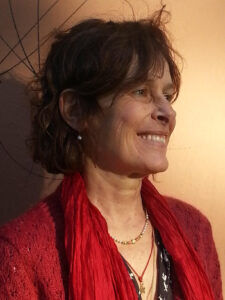
Carla Barzanò
Carla Barzanò, dietitian and journalist, is an expert in food education and the author of several books dedicated to children and families. Since 1989, she has led cooking and tasting workshops for both adults and children.
She has designed and coordinated numerous taste education projects, continuously monitored and updated through an action-research methodology, with the aim of enhancing the everyday dimensions of eating. Through these initiatives, she has engaged with a wide and diverse audience across all age groups.
She is committed to promoting practices for sustainable nutrition in line with the objectives of the United Nations 2030 Agenda.
Carla Barzanò
Carla Barzanò, dietitian and journalist, is an expert in food education and the author of several books dedicated to children and families. Since 1989, she has led cooking and tasting workshops for both adults and children.
She has designed and coordinated numerous taste education projects, continuously monitored and updated through an action-research methodology, with the aim of enhancing the everyday dimensions of eating. Through these initiatives, she has engaged with a wide and diverse audience across all age groups.
She is committed to promoting practices for sustainable nutrition in line with the objectives of the United Nations 2030 Agenda.