Let's discover nuts and seeds, valuable allies during winters past and an important resource today for maintaining a balanced diet, managing appetite and supporting mood.
A legacy from the garden: when food reserves grew on trees
Until just a few generations ago, it was not uncommon to find a walnut, hazelnut or almond tree growing in the courtyards of rural homes. These trees were not planted simply for their beauty, but as part of a vital survival strategy. In the past, winter was a particularly challenging time: fresh food was scarce, and vegetable gardens yielded very little. Against this backdrop, nuts and oil-rich seeds became a precious resource.
Thanks to their long shelf life and high energy density, they helped families get through the coldest months, providing a valuable reserve of energy and nutrients when the surrounding natural world lay dormant.
The modern paradox: an abundance of calories, a shortage of nutrients
Today, the situation has been reversed. We live in an age of unprecedented food abundance, yet our diets are often unbalanced. We consume excessive calories from ultra-processed foods while potentially falling short of certain essential micronutrients.
In this context, nuts and seeds have attracted considerable attention from nutritionists and researchers. They are no longer essential for survival, but they can contribute to a more balanced diet thanks to their content of fats, proteins, fibre, vitamins and minerals.
A concentrated source of essential nutrients
Describing nuts and seeds simply as "fatty foods" does not do them justice. Although fat is their predominant component, most of it consists of unsaturated fats, including monounsaturated and polyunsaturated fatty acids, among them the essential omega-3 and omega-6 fatty acids.
They also provide valuable plant-based proteins, which can help meet daily protein requirements, particularly when combined with other protein sources that complement their amino acid profiles. Their fibre content is equally important for maintaining intestinal health.
Nuts and seeds are also good sources of micronutrients. Their mineral content includes magnesium, potassium, zinc and copper, as well as significant amounts of calcium in certain varieties. Among the vitamins, vitamin E and several B vitamins are particularly noteworthy.
Autumn light: supporting mood and satiety
The changing seasons, particularly the transition into autumn, bring a gradual reduction in daylight hours. Changes in light exposure can affect our biological rhythms and mood, while some people may also experience changes in appetite and cravings for certain foods, especially sweets.
Nuts and seeds contribute to the overall nutritional quality of the diet through their rich nutrient content. They can also promote a greater feeling of fullness and help moderate the glycaemic response.
Preserving their goodness: storage and usage guidelines
Precisely because of their high unsaturated fatty acid content, nuts and seeds are delicate and can become rancid when exposed to light, heat and air.
To preserve their quality, they should be stored in tightly sealed containers, preferably protected from light, in a cool place away from heat sources. During the summer, especially if they have already been shelled or ground, refrigeration is recommended.
Practical tips for making the most of nuts and seeds
To incorporate nuts and seeds into your daily routine, a few simple practices can make them easier to enjoy and digest:
- Enjoying them raw: Unsalted varieties make it easier to keep salt intake under control. Lightly roasting nuts and seeds at home, at moderate temperatures and for just a few minutes, can help enhance their natural aroma.
- The grinding trick: Smaller seeds, such as sesame seeds, are easier to digest when lightly crushed or ground shortly before consumption. When eaten whole, some of their nutrients may not be fully available for absorption during digestion.
- Alternative flours and quick ideas: Seeds can be finely ground into flour and used to thicken soups and vegetable purées or to enrich coatings for vegetables. They are also excellent when used raw in homemade pesto, where walnuts or pine nuts help create a creamy texture, or mixed with a little salt to make gomasio, a traditional sesame-based seasoning.
A daily portion of around 30 grams is generally a suitable amount and can easily be incorporated into different meals: added to yoghurt or porridge for breakfast, enjoyed as a convenient and satisfying snack between meals, or used as the basis for alternative seasonings and sauces, including pesto and gomasio.
A guide to nuts and seeds: comparing nature's small but valuable treasures
Each variety offers its own nutritional profile and culinary uses:
- Walnuts: Rich in alpha-linolenic acid (a plant-based omega-3 fatty acid), walnuts are a good source of unsaturated fats and can contribute to cardiovascular health as part of a balanced diet.
- Hazelnuts: Particularly notable for their high vitamin E and oleic acid content, the latter being the same monounsaturated fat found in abundance in olive oil. They are also delicious when lightly roasted.
- Almonds: A good plant-based source of calcium and magnesium. They can be eaten with their skins on, which provide fibre and antioxidant phenolic compounds.
- Pine nuts: Traditionally used in pesto, pine nuts provide unsaturated fats, magnesium, phosphorus and other micronutrients.
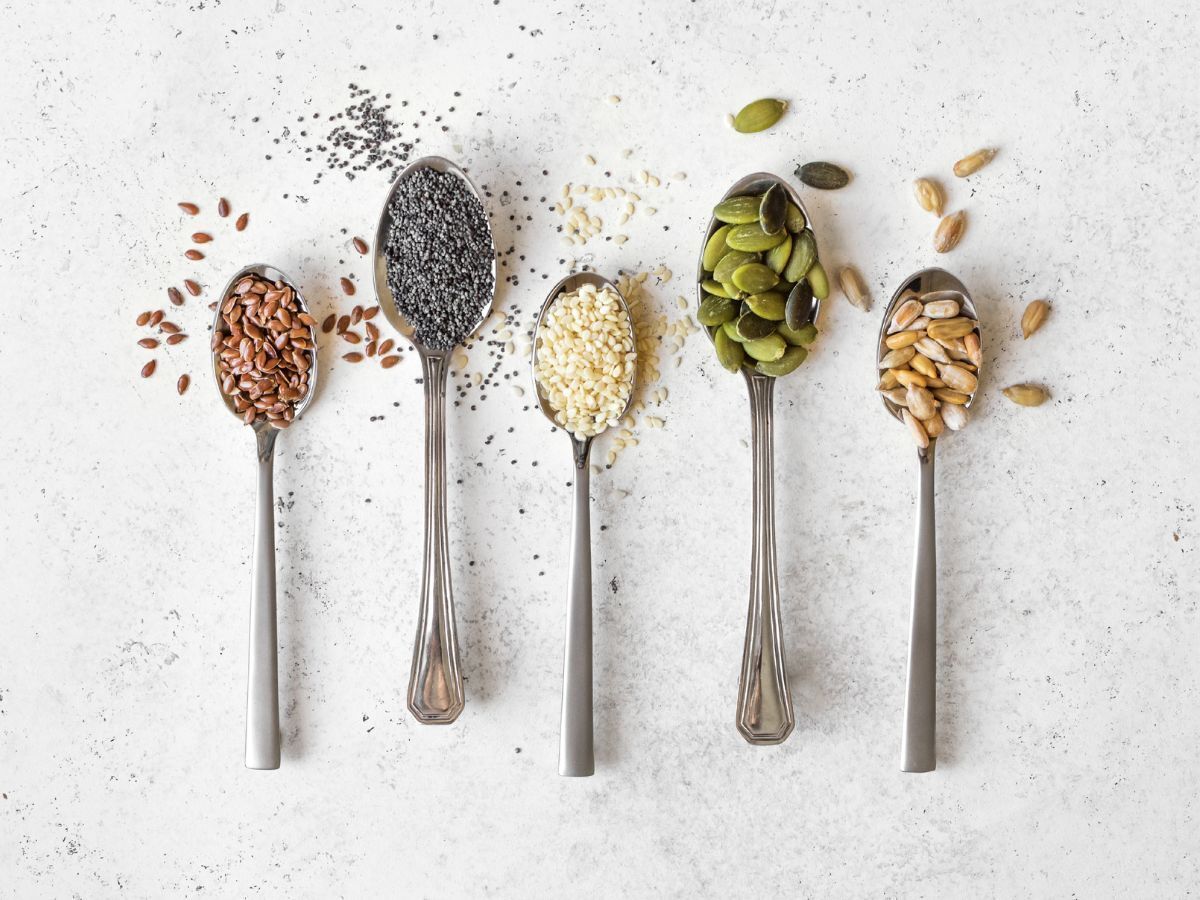
- Pumpkin seeds: A good source of zinc, they also contain antioxidant compounds, including carotenoids. Zinc contributes to the normal functioning of the immune system.
- Sunflower seeds: Affordable and versatile, sunflower seeds have one of the highest concentrations of vitamin E among seeds and are perfect for adding to salads.
- Sesame seeds: Rich in calcium, sesame seeds are the main ingredient in tahini (sesame paste). They also contain lignans, including sesamin and sesamolin, which are being studied for their potential effects on lipid metabolism.
Updated Bibliography and Scientific References:
- Fadnes LT, Balakrishna R. (2024). Nuts and seeds – a scoping review for Nordic Nutrition Recommendations 2023. Food & Nutrition Research, 68. https://foodandnutritionresearch.net/index.php/fnr/article/view/8961?utm_source=chatgpt.com
- A.A.V.V. Nutritional and Health Potential of Edible Seeds: Micronutrient Bioavailability and Mechanistic Insights
- https://pmc.ncbi.nlm.nih.gov/articles/PMC12852966/

Carla Barzanò
Carla Barzanò, dietitian and journalist, is an expert in food education and the author of several books dedicated to children and families. Since 1989, she has led cooking and tasting workshops for both adults and children.
She has designed and coordinated numerous taste education projects, continuously monitored and updated through an action-research methodology, with the aim of enhancing the everyday dimensions of eating. Through these initiatives, she has engaged with a wide and diverse audience across all age groups.
She is committed to promoting practices for sustainable nutrition in line with the objectives of the United Nations 2030 Agenda.